Book Appointment Now

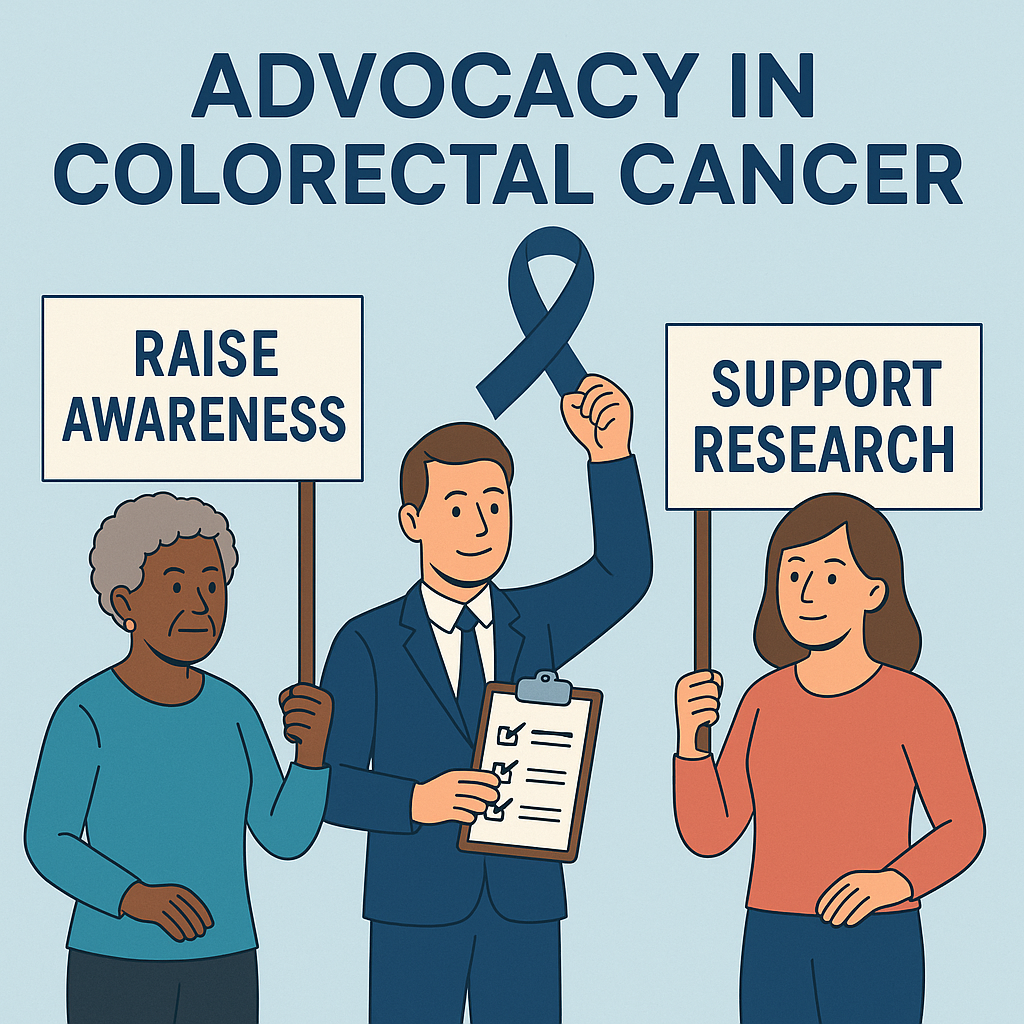
Advocacy in Action: How Patients and Families Can Make a Difference in Colorectal Cancer Research and Care
Introduction
Colorectal cancer (CRC) remains one of the most common malignancies worldwide, with approximately 1.9 million new cases diagnosed annually. Behind these statistics are individuals and families whose lives have been profoundly affected by this disease. While medical professionals work tirelessly to improve treatment outcomes, patients and their loved ones are increasingly recognized as powerful agents of change within the cancer care ecosystem.
This article explores the vital role of patient and family advocacy in advancing colorectal cancer research, treatment options, and support systems.
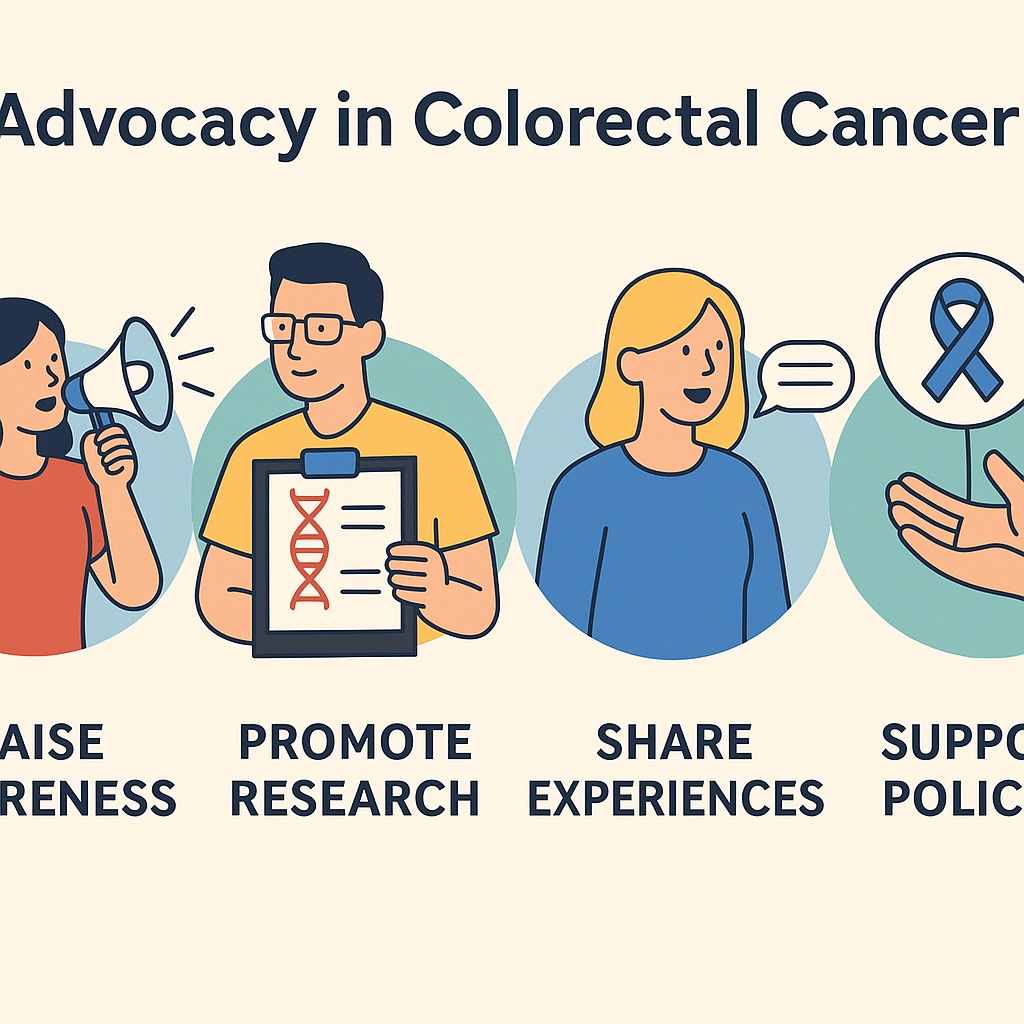
The Power of the Patient Voice
Patient advocacy emerged from the recognition that those with lived experience offer unique insights that can transform care delivery and research priorities. For colorectal cancer specifically, patient advocates have been instrumental in:
- Challenging stigma around “below the belt” cancers
- Raising awareness about early-onset colorectal cancer
- Advocating for expanded screening guidelines
- Ensuring survivorship concerns receive appropriate attention
- Bringing patient-reported outcomes into clinical trial design
Dr. Anjee Davis, President of Fight Colorectal Cancer, notes that “when patients and families share their stories, they humanize statistics and create urgency that drives policy change and research funding.”
Pathways to Advocacy in Colorectal Cancer
Personal Advocacy
The advocacy journey often begins with personal advocacy—learning to effectively navigate one’s own or a loved one’s cancer journey. This involves:
- Becoming informed about treatment options
- Seeking second opinions when appropriate
- Asking questions during medical appointments
- Maintaining organized records of treatments and side effects
- Communicating openly with healthcare teams about quality-of-life concerns
For newly diagnosed patients, resources like the Colorectal Cancer Alliance’s patient and family support navigators can provide guidance on developing these crucial self-advocacy skills.
Community Advocacy
Many patients and caregivers find meaning in extending their advocacy to support others facing similar challenges:
- Participating in peer support groups (online or in-person)
- Volunteering with patient navigation programs
- Mentoring newly diagnosed patients
- Sharing personal stories through blogs, social media, or speaking engagements
- Fundraising for patient support services
Michael Sapienza, CEO of the Colorectal Cancer Alliance and a caregiver-turned-advocate, emphasizes that “community advocacy creates immediate impact by ensuring no one faces colorectal cancer alone.”
Research Advocacy
Patients and families are increasingly recognized as valuable partners in research:
- Participating in research prioritization panels
- Reviewing research proposals and consent forms for patient-friendliness
- Serving on institutional review boards
- Joining research advisory councils at cancer centers
- Contributing to patient-centered outcomes research
Organizations like COLONTOWN, a patient-powered community, have developed specialized research advocacy training programs that prepare patients to engage meaningfully in the research process. Their PALTOWN Research Advocacy Training program equips patients with the skills to review clinical trial protocols and facilitate matches between patients and appropriate trials.
Policy Advocacy
Policy changes can dramatically improve cancer prevention, detection, and care at scale:
- Contacting elected officials about cancer-related legislation
- Participating in organized advocacy days at state capitals or Washington, DC
- Supporting initiatives for research funding increases
- Advocating for insurance coverage of screening colonoscopies and genetic testing
- Working toward policies that eliminate healthcare disparities
Fight Colorectal Cancer’s annual “Call-on Congress” brings hundreds of advocates to Washington to meet with legislators about colorectal cancer priorities. These efforts have contributed to significant policy wins, including the removal of cost-sharing for colonoscopies following positive non-invasive screening tests.
Making an Impact: Success Stories in Colorectal Cancer Advocacy
Screening Age Guidelines
Perhaps one of the most significant recent advocacy successes was the 2021 change in colorectal cancer screening guidelines by the United States Preventive Services Task Force, which lowered the recommended screening age from 50 to 45 years. This change was driven in part by relentless advocacy from patients experiencing early-onset colorectal cancer and organizations highlighting the rising incidence in younger adults.
Research Funding
The Colorectal Cancer Research Alliance has helped secure over $168 million in research funding through partnerships with the National Cancer Institute and Department of Defense Peer Reviewed Cancer Research Program. Patient advocates played crucial roles in testifying about the importance of this funding.
Clinical Trial Design
Patient advocates successfully pushed for the inclusion of quality-of-life endpoints in major colorectal cancer trials, ensuring that survival alone isn’t the only measure of treatment success. The PROSPECT trial for rectal cancer, which evaluated whether some patients could avoid radiation therapy, incorporated patient-reported outcomes after advocacy from rectal cancer survivors concerned about long-term effects of radiation.
Getting Started: Steps to Effective Advocacy
1. Educate Yourself
Effective advocates are informed advocates. Resources for building knowledge include:
- The National Cancer Institute’s colorectal cancer information pages
- Fight Colorectal Cancer’s educational materials and webinars
- Colorectal Cancer Alliance’s resource library
- COLONTOWN’s specialized patient communities organized by biomarker and treatment approach
- Major cancer center websites with patient education materials
2. Connect with Advocacy Organizations
Major organizations supporting colorectal cancer advocacy include:
- Fight Colorectal Cancer (FightCRC.org)
- Colorectal Cancer Alliance (ccalliance.org)
- COLONTOWN/PALTOWN (colontown.org)
- Young Survival Coalition’s Colon Club (colonclub.com)
- Global Colon Cancer Association (globalcca.org)
These organizations offer training, mentorship, and opportunities to get involved at various commitment levels.
3. Share Your Story
Personal narratives are powerful advocacy tools. Consider:
- Creating a concise, impactful version of your cancer journey
- Identifying the key messages you want to communicate
- Practicing your story with supportive friends or family
- Starting with lower-pressure environments before major public speaking
- Including a specific “call to action” when appropriate
4. Build Advocacy Skills
Organizations frequently offer advocacy training programs:
- Fight Colorectal Cancer’s ADVOCATES Program
- American Cancer Society Cancer Action Network’s advocacy training
- Research Advocacy Network’s educational resources
- Patient-Centered Outcomes Research Institute (PCORI) engagement resources
5. Practice Self-Care
Advocacy can be emotionally demanding, especially when dealing with one’s own or a loved one’s cancer. Sustainable advocacy requires:
- Setting realistic boundaries on time and energy
- Recognizing when to step back temporarily
- Building a supportive network of fellow advocates
- Celebrating small victories
- Honoring personal health needs
The Future of Patient Advocacy in Colorectal Cancer
The advocacy landscape continues to evolve, with emerging opportunities including:
Biomarker Education and Testing Advocacy
As colorectal cancer treatment becomes increasingly personalized based on molecular characteristics (MSI status, KRAS/NRAS/BRAF mutations, HER2 amplification, etc.), advocates are working to ensure all patients receive appropriate biomarker testing and can access targeted therapies.
Health Equity Initiatives
Addressing disparities in colorectal cancer outcomes among racial and ethnic minorities, rural populations, and socioeconomically disadvantaged groups has become a central focus of advocacy organizations. Patient advocates from underrepresented communities are particularly valuable in developing culturally appropriate interventions.
Digital Advocacy
Social media campaigns like #NeverTooYoung and virtual advocacy days have expanded advocacy reach. Digital tools allow for broader participation, including from those who may be actively undergoing treatment or unable to travel.
Conclusion
Patients and families affected by colorectal cancer need not be passive recipients of care. Through advocacy at personal, community, research, and policy levels, they can profoundly shape the landscape of cancer prevention, treatment, and survivorship. While the challenges of colorectal cancer remain significant, the collective voice of informed and passionate advocates continues to drive meaningful progress toward better outcomes and quality of life for all affected by this disease.
By channeling personal experiences into purposeful action, those touched by colorectal cancer can transform the profound challenge of this disease into a powerful force for positive change. Whether through small daily acts of self-advocacy or involvement in national policy initiatives, each contribution matters in the larger movement to reduce the burden of colorectal cancer worldwide.
References
- Fight Colorectal Cancer. (2023). Annual Impact Report 2022-2023.
- Colorectal Cancer Alliance. (2024). Patient and Family Advocacy Toolkit.
- National Cancer Institute. (2024). Cancer Trends Progress Report: Colorectal Cancer.
- COLONTOWN. (2023). PALTOWN Research Advocacy Training Program Outcomes.
- American Cancer Society. (2024). Colorectal Cancer Facts & Figures 2024-2026.
- Davidson, K.W., et al. (2021). Screening for Colorectal Cancer: US Preventive Services Task Force Recommendation Statement. JAMA, 325(19), 1965-1977.
- Siegel, R.L., et al. (2023). Colorectal cancer statistics, 2023. CA: A Cancer Journal for Clinicians, 73(3), 233-254.
- Patient-Centered Outcomes Research Institute. (2024). Engagement in Health Research Literature: Annotated Bibliography.


